



Central Texas winters have a habit of catching facility teams off guard. One week brings eighty degree afternoons, and the next brings a freeze warning and a hard overnight drop. Recent winters have brought repeated freeze alerts and winter storm watches to the region, often with only a few days of warning between one forecast and the next. For facility managers running schools, offices, churches, restaurants, or multi-site operations across Waco and the surrounding area, that swing matters more than it might seem, since commercial HVAC systems built mostly to handle Texas heat can struggle when temperatures fall fast and stay there. A few hours of planning before the next cold front arrives usually costs far less than the emergency call that follows a frozen line or a heating failure in the middle of a business day.
Why Commercial Systems Feel Winter Differently
Most commercial rooftop units and packaged systems in this region run cooling far more often than heating, so the heating side of the equipment can go months without a real workout. Heat strips, gas furnaces built into package units, and heat exchangers that sit idle all summer sometimes reveal problems only once they are finally asked to produce warm air during a cold snap. Add in older buildings with uneven insulation or ductwork that was sized mainly around summer loads, and a short freeze can turn into an uneven, uncomfortable, or even unsafe environment for staff, students, or customers. This is especially true for multi-site operators managing several buildings of different ages, since a single system that was replaced recently at one location can mask the fact that an older unit at another location is quietly falling behind. Recognizing that commercial equipment ages and fails on its own schedule, not a seasonal one, is the first step toward avoiding a winter surprise.
Protecting Pipes, Coils, and Outdoor Equipment Before a Hard Freeze
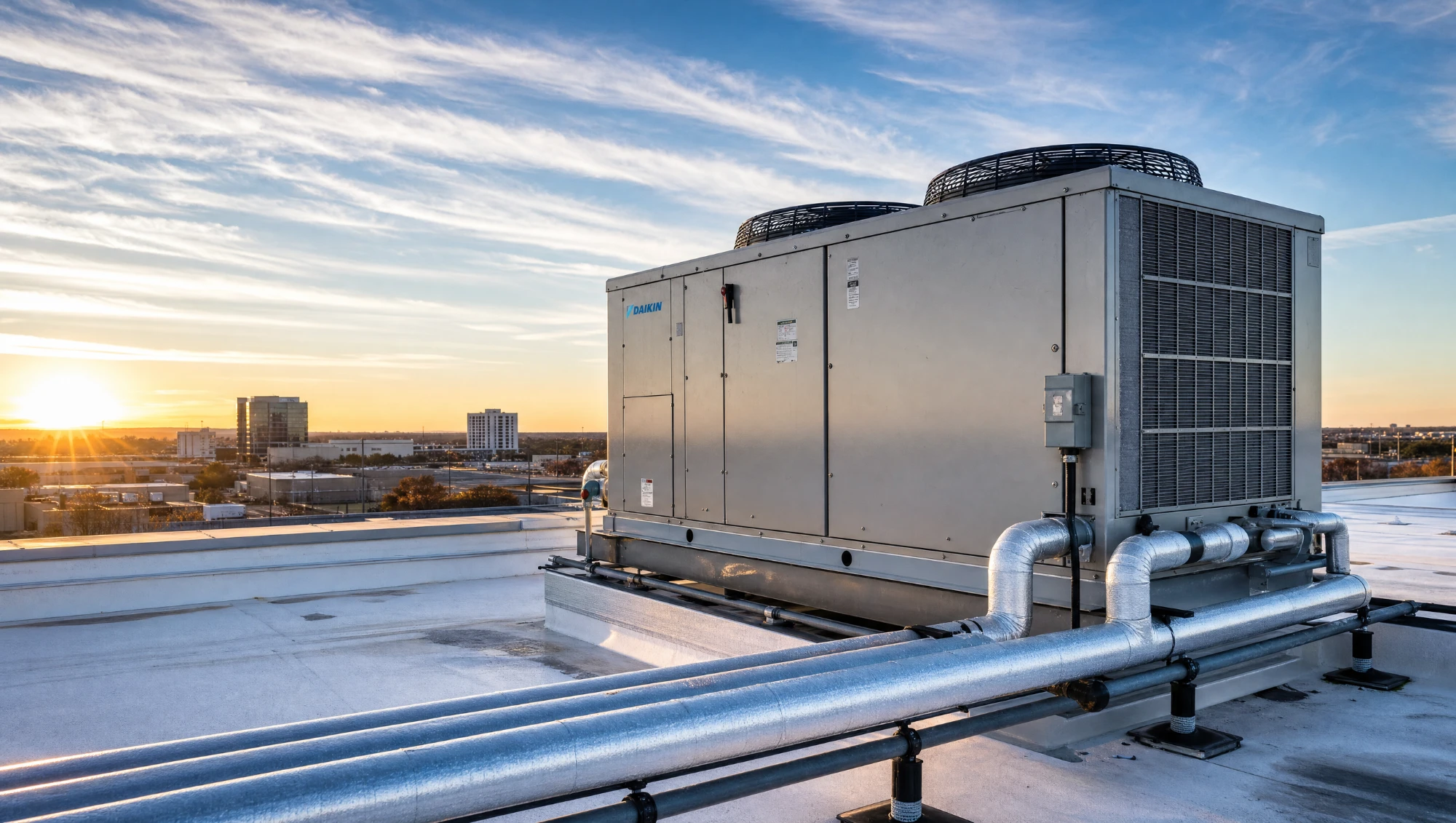
Exposed piping, condensate lines, and outdoor coils are usually the first casualties of a hard freeze, particularly on buildings that were not originally designed with Central Texas cold snaps in mind. Insulating exposed lines, checking that condensate drains are clear and sloped properly, and confirming that outdoor units have adequate clearance from ice buildup can prevent a surprising amount of damage. Facilities with rooftop units should also have someone confirm that drain pans and traps will not collect standing water that can freeze and crack a line overnight. None of this takes long to check, but it is far easier to handle before a freeze watch is issued than during one.
What a Pre Winter Inspection Should Actually Cover
A real pre winter inspection goes beyond a quick visual look at the thermostat. It should include a check of heating elements and controls, a test run of the heating cycle rather than just the cooling cycle, a review of filters and airflow, and a look at electrical connections that can loosen over a long summer of vibration and heat cycling. Belts, bearings, and blower motors are also worth a close look, since a component that was barely hanging on through the summer cooling season may not survive the added strain of a heating cycle it rarely has to run. For facilities with multiple rooftop units or package systems, documenting the condition of each unit gives a clear picture of which equipment is ready for winter and which needs attention now, before it becomes an emergency later. This kind of documented, unit by unit record is also useful when planning next year's budget for repairs or replacements, and it gives a facility manager something concrete to point to when justifying that budget to ownership.
Planning for Emergency Response Before You Need It
Even a well maintained system can fail during a sudden freeze, so it helps to know ahead of time how a facility will get a technician on site quickly if something does go wrong. Commercial buildings, especially schools, healthcare facilities, restaurants, and government sites, cannot simply wait until regular business hours if a heating system fails overnight during a freeze. Having a maintenance partner with twenty four hour emergency response and a priority dispatch process based on facility type and operational impact means a cold building does not turn into a multi day disruption. Knowing who to call, and knowing that call will be answered, is part of winter readiness just as much as the mechanical inspection is.
Budgeting for Winter Readiness Instead of Winter Repairs
Winter readiness is ultimately a budgeting question as much as a mechanical one. A facility that treats cold weather preparation as a planned, scheduled task can spread the cost across a maintenance contract and catch small issues while they are still inexpensive to fix. A facility that waits for the first freeze to find out what is broken usually pays for the same fix anyway, plus overtime labor, plus whatever damage occurred while the system was down, and often plus the cost of temporary heating equipment while a permanent repair is scheduled. For multi-site operators in particular, a consistent inspection schedule across every location makes it much easier to forecast costs and avoid the kind of surprise repair bill that disrupts an otherwise predictable budget. It also makes conversations with ownership or a board much simpler, since a documented inspection history supports a replacement recommendation far better than a guess ever could.
Cold fronts do not wait for a convenient time to arrive, and neither should a winter readiness plan. If it has been a while since your commercial HVAC system was checked with the heating season in mind, now is the time to get ahead of it. TexTech Services works with facility managers across Waco and Central Texas to inspect, repair, and maintain the systems that keep buildings comfortable and operational no matter what the forecast brings, and you can reach the team any time through TexTech Services.
